

test shortcode 1
Rolling Over Your 401(k) Just Got Less Painful - Here's What the IRS Changed
Valuation Reserve Requirements
Heirless Estate Planning
How to Save Energy This Fall
AI-Powered Corporate Fraud: What Business Leaders Need to Know
Pre-Election Focus on Russian/Iran Sanctions, AI Utility Bills, Crypto Regulation and Nondiscriminatory FEMA Assistance
How to Account for Bonds
New Trump Account Updates
Understanding Inflation Accounting
Bond Investment Strategies
Rolling Over Your 401(k) Just Got Less Painful - Here's What the IRS Changed
Valuation Reserve Requirements
Heirless Estate Planning
How to Save Energy This Fall
AI-Powered Corporate Fraud: What Business Leaders Need to Know
Pre-Election Focus on Russian/Iran Sanctions, AI Utility Bills, Crypto Regulation and Nondiscriminatory FEMA Assistance
How to Account for Bonds
What Your Tax Preparer Wishes You Already Knew
How to Get Your 2022 Finances in Order
Mamdani Scraps Property Tax Hike, Counts Second-Home Revenue
Bezos Family Anchors Robin Hood Endowment With $100 Million Gift
Milken to Debut Toronto Summit as Canada Draws Global Elite
Lake Tahoe Power Crunch Shows AI’s Growing Energy Toll in West
Hamptons Home Rentals for $100,000 Sit Empty Ahead of US Open Golf Weekend
Epstein Island’s Billionaire Owner Is Battling Zealous Voyeurs
Atlas Co-Founder Gives WashU $200 Million for New Health School
Why US Inflation Matters for British Investors
With Inflation on Rise, I Bonds Are Luring Investors Again
Modi Asks Indians to Stop Buying Gold, Hitting Jewelry Stocks
plano cpa
rockwall cpa
Dallas Property Taxes
ESOP Salt Lake City
IRS Representation
Business Tax Planning
Wiring Money does and do nots
Write a 350-word article about 2026 changes to...
Write a 200-word article about tax-loss harvesting in...
Write a 200-word article about IRA tax benefits...
Rolling Over Your 401(k) Just Got Less Painful – Here’s What the IRS Changed
October 1, 2026
Anyone who has moved retirement money out of an old employer's plan knows how frustrating it can be. Every administrator has their own forms. Timelines are all over the place. Paper checks show up weeks later with vague instructions. The whole thing should have been fixed a long time ago.
 Anyone who has moved retirement money out of an old employer's plan knows how frustrating it can be. Every administrator has their own forms. Timelines are all over the place. Paper checks show up weeks later with vague instructions. The whole thing should have been fixed a long time ago.
The IRS is finally doing something about it. Notice 2026-49 puts out four sample forms and a five-step procedure meant to bring some consistency to direct rollovers. Plans do not have to use them, and there is no safe harbor, but you can see where this is going.
The Problem Worth Solving
When you leave a job, you have to figure out what to do with your 401(k). You can cash it out and take the tax hit. You can leave it sitting there. Or you can roll it into a new employer's plan or an IRA.
A direct rollover is usually the way to go. The money travels straight from the old plan to the new one without ever hitting your bank account, which keeps things clean and avoids the 60-day deadline you face if you take possession yourself.
The trouble is that every plan does things differently. A 2024 GAO study found that roughly one in three people doing rollovers ended up with a paper check in hand that they were supposed to forward themselves. Checks get lost. They sit on the counter for weeks. And the whole time, that money is not invested anywhere.
How the New System Works
Here is what Treasury is proposing. You fill out Form 1 and give it to the plan or IRA that will be receiving your money. That form lets the receiving plan reach out to your old plan and handle the transfer on your behalf. The two plans swap Forms 2 through 4 to make sure everything is in order. If something goes sideways, the receiving plan has to tell you.
The IRS wants this done electronically whenever possible. When electronic is not an option, the old plan should write a check payable to the receiving plan for your benefit and mail it directly there. No more sending checks to participants and hoping they take it from there.
Tax Rules Stay the Same
None of this changes how rollovers are taxed. Eligible distributions that complete a proper rollover still stay out of income. You still cannot roll over a required minimum distribution. Pre-tax money stays pre-tax. Roth stays Roth. This is about the plumbing, not the tax code.
IRA-to-IRA transfers are not covered here. Those already go through the ACATS electronic system, so Treasury left them alone.
No Safe Harbor Yet
Plans can use these forms, change them, or ignore them completely. Right now, there is no reward for following along.
That could change. Treasury says it is thinking about offering safe harbors down the road. A receiving plan that uses the standard forms might eventually be allowed to assume the rollover is valid unless something looks off. That would give administrators a real incentive to adopt the new process.
Conclusion and What Comes Next
The IRS has hinted at bigger changes. Future guidance might require electronic transfers across the board, kill off the practice of mailing checks to participants, and get rid of some of the procedural friction that slows things down.
For now, the sample forms are sitting in the appendix of Notice 2026-49. They are there if you want them. If you have ever spent weeks tracking down a check that went to the wrong address or trying to explain one plan's process to another plan's administrator, you understand what Treasury is trying to fix. They want rollovers to be faster, simpler, and harder to mess up. This is a start.
 Picture two couples, each with a baby born this year, each routing $2,500 of salary into that child's Trump Account through an employer's payroll system. One couple sits in the 35% bracket. The other, at roughly $65,000 of taxable income, is in the 12% bracket. Both contributions escape federal income tax. The first couple's bill shrinks by $875. The second couple's bill shrinks by $300. Same account, same dollars, nearly three times the benefit for the household that needed it less.
 For the first time since 2022, the IRS is changing standard mileage rates in the middle of the tax year. If you track business, medical or moving miles, this matters. Starting July 1, 2026, the numbers go up, and your recordkeeping needs to get more precise.
 A county in Michigan was owed about $2,200 in back taxes. To collect it, the government took a home worth close to $200,000, auctioned it for a fraction of that, and called the matter settled. The family is now putting a simple question to the Supreme Court: when the state sells your house over a small debt, does it owe you the real worth of what it took or only whatever the auction happened to fetch?
 Here's something that flew under the radar for most people: a court decision from late last year could put money back in your pocket if you got hit with IRS penalties during COVID. But you need to act fast! For some taxpayers, the deadline to file a claim is July 10.
 Artificial intelligence is driving an unprecedented surge in data center construction. Developers, private equity sponsors and their tax advisors are navigating a complicated web of questions that touch everything from ownership structure to site selection to power sourcing. Get the early decisions wrong and the tax consequences can follow a project for years.
 Picture two things happening at the same time. The agency responsible for reviewing your
  Tax season is here, and while the IRS opened its doors for 2025 returns on Jan. 26, with the familiar April 15 deadline intact, this year's filing experience is shaping up to be anything but routine. A perfect storm of workforce cuts, rushed new tax breaks, and strained systems means that getting your return right the first time has never been more important.
 After a whirlwind 2025 that produced what may be the largest tax bill in American history, the coming year looks dramatically different. Tax policy experts are predicting a legislative standstill, a turbulent tax filing season, and lingering questions about how new provisions will work when put into practice.
 American parents now have access to a completely new savings tool designed to give children a financial foundation for the future. Established through The One Big Beautiful Bill Act, these accounts carry the name of the current president and come with a unique set of rules that the IRS has just begun to clarify.
 America's housing crisis has reached a breaking point. With median home prices soaring past $400,000, the National Association of Home Builders reports that 60 percent of U.S. households can't even afford a $300,000 home. The math has become impossible for most American families.
 The IRS has released draft Schedule 1-A, introducing four new temporary deductions within the One Big Beautiful Bill Act. If you are wondering what the new form looks like and how the calculations work, read on as we explore each below.
 Required minimum distributions (RMDs) from traditional IRAs and 401(k)s often become a significant tax burden during retirement. As the percentage of your IRA that must be distributed increases each year, many retirees face higher adjusted gross income and increased exposure to stealth taxes. However, with strategic planning, you can transform RMDs from burdens into opportunities.
 Running a small business often means working with a mix of people: some full-time staff, part-time helpers, seasonal workers or project-based contractors. While this flexibility helps manage costs and workload, it creates a crucial decision point that many business owners underestimate: properly classifying each worker.
 The rise of artificial intelligence tools like ChatGPT and Grok has transformed how Americans seek information. From meal planning to complex financial questions, these platforms offer instant answers to virtually any query. But when it comes to U.S. tax advice – especially international tax matters – relying on AI can lead to serious and costly mistakes.
 For many high-income earners and those approaching retirement, a Roth IRA conversion represents a strategic financial move that can significantly impact long-term wealth preservation. This approach allows you to restructure your retirement savings in a way that could potentially reduce your overall tax burden while creating more flexibility in your golden years.
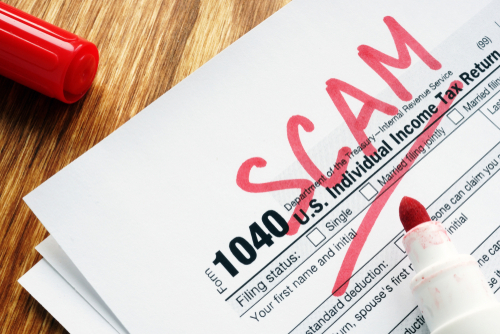 As tax filing season begins, scammers are ramping up efforts to steal taxpayers' personal information through increasingly sophisticated schemes. Below, we discuss the latest scam, what to look out for in general, and what to do if you suspect something malicious.


 Found via Hurrbee